
Bulk T-Shirt Printing Free Delivery: Why Most Companies Are Lying to You (And How to Spot the Real Deal)
Table of Contents
- The Mind Games Behind “Free” Shipping Offers
- How Smart Printers Actually Make Free Delivery Work
- The Technology That Separates Winners from Wannabes
- Building Partnerships That Fund Your Free Shipping Dreams
- Custom Design Complexity: Where Free Delivery Gets Tricky
- Final Thoughts
TL;DR
- Free delivery isn’t actually free – it’s basically companies playing mind games with your wallet
- The companies that actually pull it off have figured out smart ways to cut real shipping costs through better operations
- Good tech platforms and automated systems make it possible to offer genuine free shipping without going broke
- Smart partnerships across the supply chain create the wiggle room needed to absorb those shipping costs
- Complex custom designs make free delivery way trickier to pull off profitably
- The best operations cut actual shipping costs by 40-70% through smart positioning and partnerships
Look, the custom t-shirt printing world is absolutely exploding right now. Companies are throwing around “free delivery” promises left and right, and with bulk printing starting at $11.78 for 50 units, it’s getting harder to tell who’s legit and who’s just playing games with the numbers.
The Mind Games Behind “Free” Shipping Offers
Okay, real talk – I used to fall for this stuff all the time. You see “free shipping” and suddenly your brain goes, “Ooh, I’m getting something for nothing!” But here’s the kicker – you’re not.
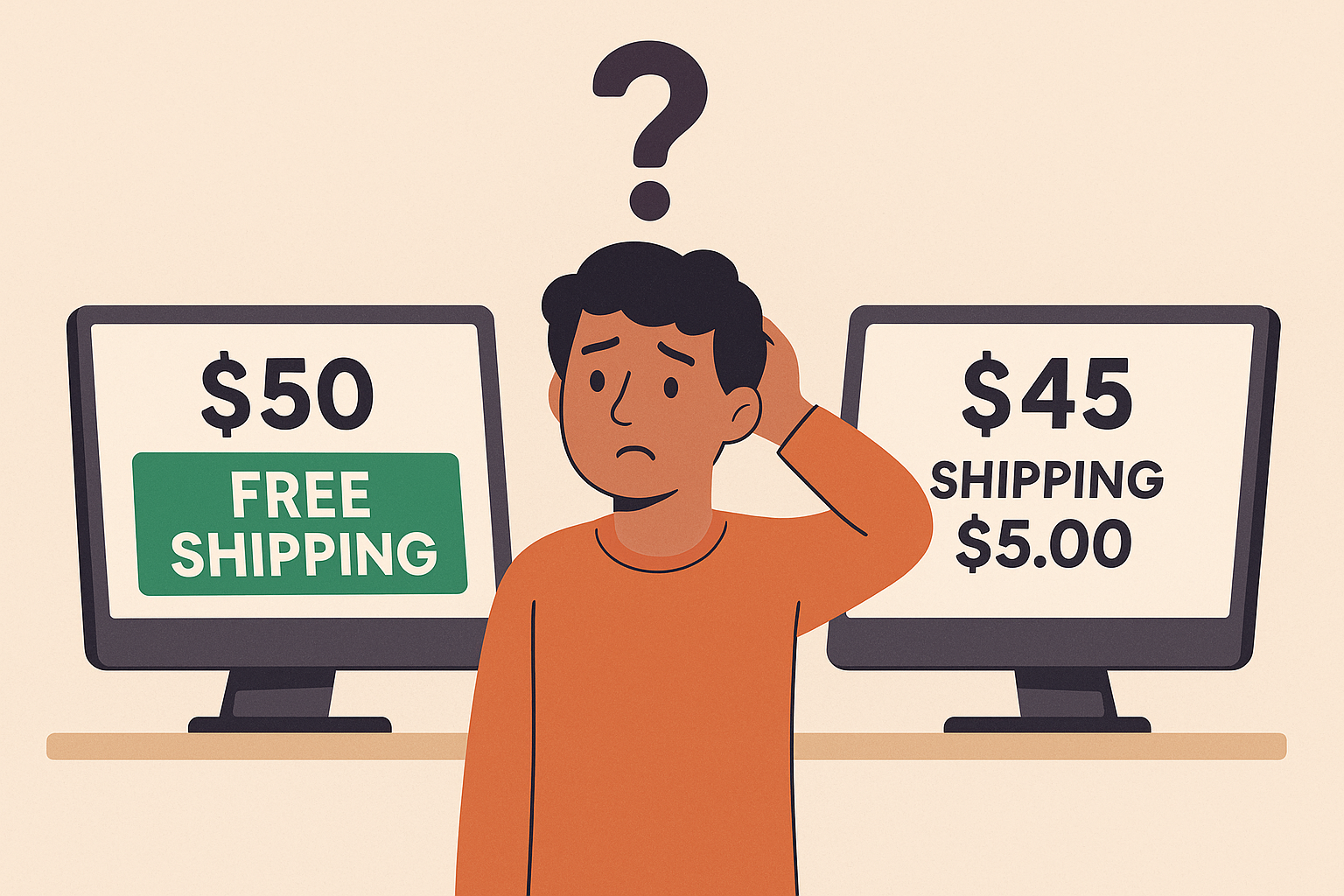
Free delivery in bulk t-shirt printing is basically companies running a psychological experiment on your wallet. They figured out that we’ll consistently pick the higher-priced item with “free shipping” over a cheaper option with separate delivery charges, even when the total cost is exactly the same. It’s like our brains just shut off when we see that magic word “free.”
This mental trick is so powerful that businesses using free delivery messaging get 40% more people asking for quotes than competitors who just tell you the real price upfront. Wild, right?
Here’s how it works in your head: When you see a $200 order with free shipping versus a $180 order with $20 shipping, your brain treats these like completely different deals, even though you’re paying $200 either way. We literally can’t help ourselves.
Bulk tshirt printing free delivery programs are basically exploiting this exact mental shortcut. We process “free” as pure value, even when we’re clearly paying for shipping through higher product prices.
Your Brain on “Free” Shipping: The Cognitive Trap

The t-shirt printing world is absolutely exploding right now – according to Straits Research, we’re talking about a market that hit $6.46 billion in 2024 and is projected to reach $15.89 billion by 2033. That’s a lot of companies fighting dirty for your business using psychological pricing tricks.
This explosive growth means more companies are basically waging psychological warfare to grab your attention. Custom t-shirts have become ground zero for the “free shipping” arms race.
Why You’ll Always Order More Than You Planned
Here’s something that’ll blow your mind – people consistently bump up their order quantities by 20-30% when they see those free delivery thresholds. I’ve watched this happen so many times it’s almost painful.
Picture this: Someone plans to order 50 shirts, sees that free shipping kicks in at 75 units, and suddenly finds all kinds of reasons to justify ordering more. It’s like going to Costco for toilet paper and leaving with a kayak. Free shipping makes us do weird math.
| Order Quantity | Price Per Unit | Total Cost | What Actually Happens |
|---|---|---|---|
| 25 shirts | $12.50 | $312.50 + $25 shipping | You hesitate because shipping feels expensive |
| 50 shirts | $11.00 | $550 + free shipping | Feels like a good deal, you order |
| 75 shirts | $10.50 | $787.50 + free shipping | You upgrade to hit that “free” threshold |
| 100+ shirts | $9.75 | $975+ + free shipping | Now you’re maximizing “value” |
Bulk tees orders follow this pattern religiously. I’ve literally seen corporate buyers who needed 60 shirts suddenly decide they could use 100 just to qualify for free delivery. The math rarely makes sense, but our brains can’t resist.
The Messaging War: Why Simple Wins Every Time
Companies figured out that keeping things simple absolutely demolishes complex pricing when it comes to getting customers. A simple “free delivery” message cuts through all the confusion and removes that annoying objection that often kills bulk printing orders. The psychological impact is so strong it boosts conversion rates by about 35%.
Think about it – a corporate client comparing quotes for 200 custom polo shirts will almost always choose “Quote A: $2,400 with FREE SHIPPING” over “Quote B: $2,200 + $200 shipping” even though both total exactly $2,400. That word “FREE” just hits different, you know?
The Hidden Math: Where Your Shipping Costs Really Go
Every company offering free delivery has basically become a master at hide-and-seek with shipping costs. They’re not making shipping disappear – they’re just spreading those costs around their pricing in ways that make you feel good about the deal.

Custom t-shirts with free shipping don’t magically eliminate shipping costs – they just redistribute them in ways that feel psychologically satisfying.
Geographic Pricing Zones: The Invisible Strategy
Here’s how they actually pull it off: Smart printers charge customers in California a bit extra to cover the cheap shipping to folks in Nevada. It’s like Robin Hood, but for delivery costs. They create invisible pricing zones where they eat higher shipping costs for nearby customers while building margins from distant orders that cost way less to ship than they’re collecting.
This geographic game of averages lets them offer universal free shipping while still making money across their entire customer base.
How Smart Printers Actually Make Free Delivery Work
The companies that actually deliver on their free shipping promises aren’t just playing pricing games – they’ve invested serious money and time into making their operations so efficient that they can genuinely absorb shipping costs without going broke.
The industry’s getting pretty wild with tech innovations. In March 2024, “Kornit Digital unveiled its Atlas MAX POLY system” (Straits Research), specifically designed for high-volume polyester printing with eco-friendly NeoPigment™ Inks. This isn’t just about better printing – it’s about creating efficiencies that actually fund those free shipping programs.
These tech improvements aren’t just for show – they’re about making operations so smooth that custom t-shirts require fewer do-overs, less waste, and faster turnaround times. All of that efficiency creates the wiggle room needed for genuine free shipping.
Strategic Inventory Placement: The Game-Changer
The really smart operations figured out something pretty obvious – if you put your stuff closer to customers, it costs way less to ship. Revolutionary, right? But seriously, strategic inventory positioning and smart fulfillment networks can cut shipping costs dramatically while actually getting orders to customers faster.
The U.S. custom t-shirt printing market hit $857.5 million in 2023 and is projected to grow at 11.8% annually through 2030. With that kind of competition, companies have to get creative with operations to make free shipping actually work.
Check out operations like those in our screen printing portfolio – they show how smart positioning and operational excellence make genuine free delivery possible.
Regional Hub Networks: Cutting Distances by 60%
The most sophisticated printers set up regional fulfillment points or partner with local operations, which cuts average shipping distances by about 60% while keeping quality control centralized. Instead of shipping everything from one location, they’re smart about getting closer to customers.
Custom t-shirts shipped from regional hubs arrive faster and cost way less to deliver. I’ve seen operations cut their average shipping distance from 1,200 miles down to under 400 miles just through smart hub placement.
Carrier Negotiations: The Volume Advantage
Here’s where volume really pays off – big commitments with shipping carriers can get you rates that are 40-70% below what regular folks pay. These negotiated rates become like a secret weapon that smaller operations just can’t match.
Free Delivery Reality Check:
- Do they have regional fulfillment set up?
- Are they getting serious volume discounts (at least 40% off published rates)?
- Do they use predictive inventory positioning?
- Is their production batching optimized?
- Have they mapped out geographic pricing zones?
- Do they have quality control that prevents expensive reprints?
- Are they targeting the right customers for free shipping offers?
Predictive Inventory: AI Meets T-Shirt Printing
Some companies are getting scary good at predicting what you’ll order. They’re like that friend who always knows what you want for lunch before you do. Machine learning systems analyze patterns and trends to pre-position inventory strategically, which cuts down on those expensive rush shipping costs that could kill free delivery margins.

Custom printed t shirts benefit huge from these predictive systems. When a printer knows that navy blue shirts always spike in September for corporate events, they can pre-position inventory and avoid expensive rush shipping.
Production Batching: The Efficiency Multiplier
Smart production scheduling lets printers batch orders strategically, which brings down per-unit costs and creates the margin space needed for absorbed shipping. Most customers never see this behind-the-scenes coordination, but it’s what makes sustainable free delivery actually possible.
Smart Order Aggregation: Economy of Scale in Action
Advanced batching systems combine multiple customer orders with similar specs, reducing setup costs and creating economies of scale that fund free delivery programs. It’s all about that behind-the-scenes coordination that improves efficiency without messing with individual order quality or timing.
Picture this: A smart operation might batch three separate orders – 100 navy polo shirts for Company A, 75 navy t-shirts for Company B, and 50 navy hoodies for Company C. By printing all the navy stuff at once, they cut setup time by 70% and pass those savings into their free shipping program.
The Technology That Separates Winners from Wannabes
Modern bulk t-shirt printing operations use some pretty sophisticated tech platforms that optimize everything from taking your order to tracking delivery. These systems create competitive advantages that actually justify free delivery while keeping companies profitable through automated efficiency improvements.

Custom t-shirts printed by tech-forward operations benefit from systems that most customers never see but directly impact their experience and whether free shipping programs can actually survive.
Automated Pricing: The Smart Money Manager
Think of it like surge pricing for Uber, but for t-shirts. Sophisticated pricing engines automatically adjust product costs based on delivery zones, order characteristics, and real-time shipping rates to keep things profitable while offering free delivery. This automation removes human error from complex pricing decisions and makes sure margins stay healthy across all kinds of different orders.
Dynamic Cost Allocation: Set It and Forget It
Advanced systems automatically spread shipping costs across order items based on weight, destination, and profit margins, ensuring sustainable free delivery without someone having to manually calculate every single order. This algorithmic approach handles thousands of pricing variations that would be impossible to manage by hand.
With 50 shirts starting at $8.29 for budget options, automated pricing systems have to carefully balance competitive pricing with free shipping economics across different quality levels.
Real-Time Profitability Tracking: Know Your Numbers
Dashboard systems track the real cost of free delivery programs by customer, region, and product type, which lets companies continuously optimize their pricing strategies. This visibility helps companies figure out which parts of their free delivery program are actually making money and which parts need fixing.
| What They Track | Target Range | Why It Matters for Free Shipping |
|---|---|---|
| Average Order Value | $200-500 | Higher orders make free shipping math work |
| Shipping Cost % of Revenue | 3-7% | Has to stay in this range or you go broke |
| Production Efficiency | 85-95% | Higher efficiency creates margin for shipping |
| Return/Reprint Rate | <2% | Returns kill free shipping margins fast |
| Customer Lifetime Value | $800-2000 | Justifies eating shipping costs upfront |
CRM Integration: VIP Treatment Through Data
Customer relationship management systems identify high-value customers who qualify for enhanced free delivery terms, using shipping benefits as tools to keep customers happy and get them to order more. This targeted approach maximizes the return on free delivery investments by focusing benefits on the customers who are actually worth it.
Custom t-shirts for repeat corporate clients often get enhanced free shipping terms because their lifetime value justifies eating the shipping costs.
Quality Control: Protecting Your Free Delivery Investment
Free delivery programs absolutely require solid quality control systems to prevent costly reprints and re-shipments that could wipe out profit margins. The economics only work when orders get done right the first time, making quality assurance a critical part of sustainable free shipping.

Digital Approval Workflows: Preventing Expensive Mistakes
Pre-production approval systems with customer sign-off requirements reduce production errors by 85%, protecting free delivery margins from expensive correction shipments. These digital workflows create accountability while making the approval process smoother for complex custom orders.
Building Partnerships That Fund Your Free Shipping Dreams
The most successful bulk t-shirt printing operations with free delivery don’t go it alone – they leverage strategic partnerships across the supply chain, from blank apparel suppliers to shipping carriers. These integrated networks create cost advantages that individual companies just couldn’t achieve by themselves.
Strategic partnerships are reshaping how this whole industry works. “In November 2024, Printful and Printify announced their merger” (Straits Research), creating expanded opportunities for growth and providing millions of customers with enhanced global business capabilities while keeping their separate brand identities.
Community-focused operations that prioritize giving back to the community often develop stronger partnership networks that support sustainable free delivery programs.
Vertical Integration vs. Smart Partnerships: Choosing Your Path
Companies have to strategically choose between doing everything themselves versus partnering up for different parts of their operation, with each approach offering distinct advantages for supporting free delivery programs. The trick is understanding which functions benefit from direct control versus working with others.
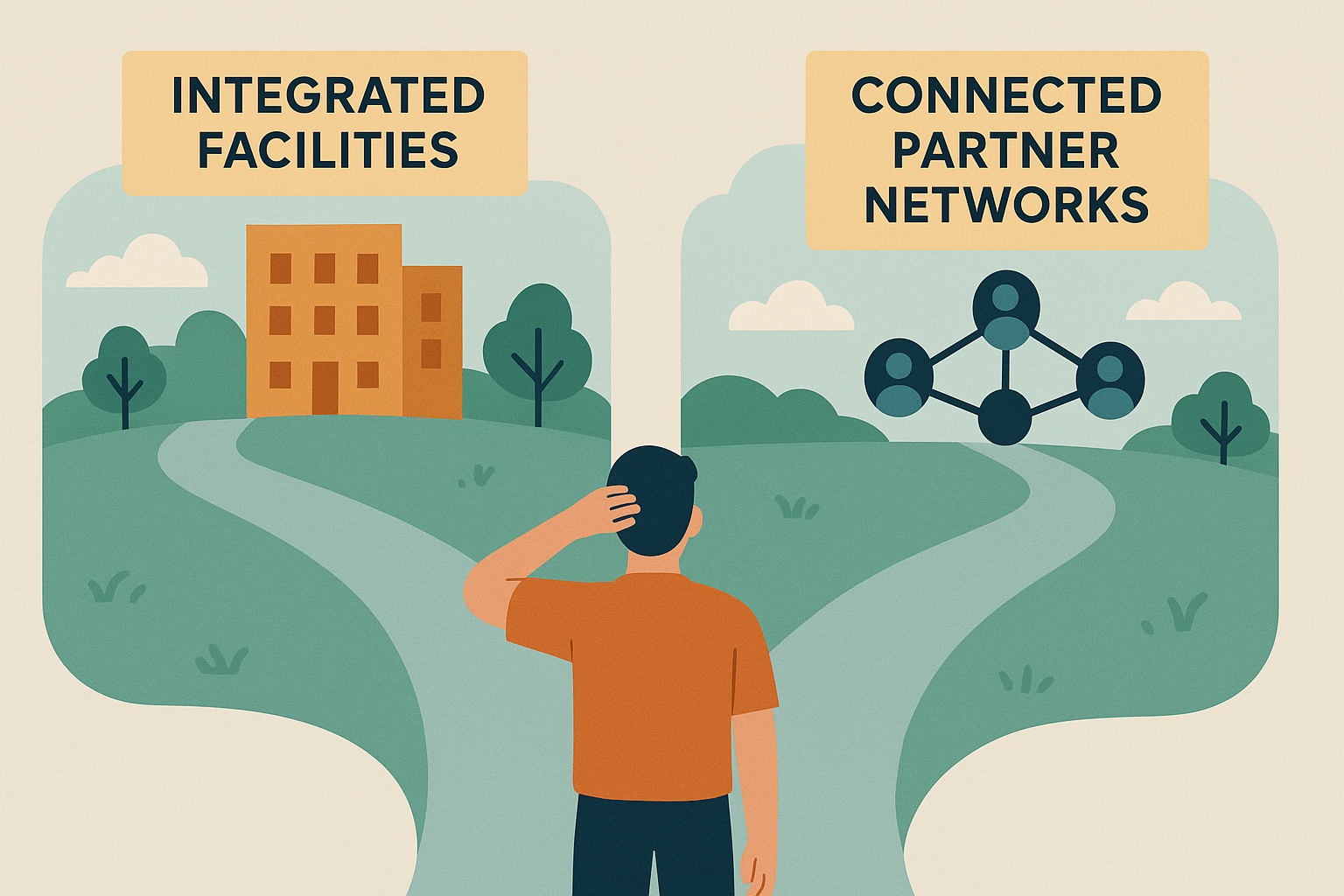
Custom t-shirts benefit from different partnership approaches depending on volume, complexity, and how far you need to reach.
Blank Apparel Supplier Relationships: The Foundation
Long-term contracts with blank apparel suppliers provide predictable costs and priority allocation, which is essential for maintaining margins that support free delivery on bulk orders. These partnerships often include volume discounts and guaranteed availability that smaller operations just can’t access.
Regional Fulfillment Partnerships: National Reach Without Capital
Strategic partnerships with regional printers or fulfillment centers let smaller companies compete nationally without massive capital investment, supporting free delivery through distributed operations. This approach allows smaller companies to compete with the big guys while maintaining local service quality.
Customer Segment Specialization: Finding Your Profitable Niche
Successful operations often specialize in specific customer segments, which lets them optimize their entire operation and free delivery programs for the unique needs of their target market. This focus creates efficiency advantages that support sustainable free shipping.
Specialized events like those showcased in our work with the WUSTL Pow Wow show how niche specialization enables premium pricing that supports free delivery economics.
Corporate and B2B Focus: The Sweet Spot
Companies focusing on corporate clients can offer way better free delivery terms because of larger average order values and more predictable demand patterns. Business customers also tend to value reliability and service quality over rock-bottom pricing, creating margin space for free delivery programs.
A printer specializing in corporate uniforms might offer free delivery on orders over $500, knowing their average corporate order is $1,200. This strategy works because business customers value convenience and reliability over absolute lowest pricing, allowing sustainable free shipping economics.
Custom Design Complexity: Where Free Delivery Gets Tricky
The custom t-shirt market requires some pretty sophisticated strategies that go way beyond basic printing services, focusing on specialized capabilities and unique value propositions that justify premium pricing structures. Managing this complexity while keeping free delivery alive requires some seriously advanced operational systems.

Custom t-shirts with intricate designs really challenge the economics of free shipping because complexity increases production time, setup costs, and the chances something goes wrong.
Balancing Creativity with Operational Efficiency
Advanced custom t-shirt operations have to balance unlimited creative possibilities with operational efficiency, requiring systems that can handle complex designs while maintaining cost-effective production workflows. This balance becomes absolutely critical when free delivery margins depend on predictable production costs.
Multi-Color Design Optimization: The Technical Challenge
Screen printing operations develop proprietary color matching systems and setup reduction techniques that allow complex custom designs without proportional cost increases. These technical capabilities maintain margins for free delivery programs even when handling sophisticated design requirements.
Custom Design Free Shipping Reality Check:
- Design complexity level: Simple/Medium/Complex
- Number of print colors: ___
- Print locations (front/back/sleeve): ___
- Order quantity: ___
- Estimated production time: ___
- Shipping zone: ___
- Free shipping qualification: Yes/No
- Alternative options if not qualified: ___
Size and Fit Consultation: Preventing Costly Returns
Premium custom t-shirt providers offer sizing consultation and sample programs that reduce return rates and customer dissatisfaction, protecting the economics of free delivery by minimizing reverse logistics costs. Prevention is always way cheaper than correction in the shipping world.
Design Iteration Management: Controlling Scope Creep
Streamlined digital design approval workflows with unlimited revisions create customer satisfaction while controlling production costs through efficient change management systems. These processes prevent the scope creep that can absolutely destroy free delivery margins on custom projects.

Educational initiatives like our involvement in the youth language fair showcase how custom design expertise translates into community impact while maintaining operational excellence.
Cultural Authenticity: The Competitive Advantage
Custom t-shirts serve as powerful brand storytelling vehicles, requiring printers to understand marketing psychology and cultural sensitivity to create meaningful designs that resonate with target audiences. This expertise becomes a differentiator that supports premium pricing and free delivery programs.
Custom t-shirts with authentic cultural elements command higher prices and customer loyalty, creating the margin space necessary for sustainable free shipping programs.
Authentic Cultural Representation: Beyond Surface-Level Design
Authentic cultural representation in custom designs requires deep understanding of traditions and symbols, creating competitive advantages for operations with genuine cultural connections and expertise. This authenticity justifies premium pricing that supports free delivery economics while serving underrepresented communities.

Ready to experience bulk t-shirt printing with genuinely free delivery? Look, we’re not perfect, but Skyy Screen Printing has figured out how to actually deliver on free shipping without playing games with your order total. As a Native American-owned operation and NMSDC-certified supplier, we’ve built the partnerships and expertise needed to deliver on our free shipping promise to all 48 contiguous states with 3-7 business day delivery while creating meaningful custom designs. Want to see how it works? Just ask – we’re happy to explain our process instead of hiding behind marketing speak. Get your quote today.
Final Thoughts
Here’s the bottom line – understanding how bulk t-shirt printing free delivery actually works reveals why so many companies can’t deliver on their promises. The operations that succeed have put in serious work building sophisticated supply chain management, technology platforms, and strategic partnerships that create genuine cost advantages.
Free delivery isn’t magic – it’s the result of operational excellence and smart business strategy. Companies that master these fundamentals can offer authentic free shipping while maintaining quality and profitability. Those that don’t often disappoint customers with hidden fees, terrible service, or business models that just don’t work.
When you’re evaluating bulk t-shirt printing options, look beyond the flashy marketing messages to understand the operational capabilities that actually support free delivery promises. The companies with genuine free shipping have usually spent years building the systems and relationships that make it possible.
And here’s how to spot the real deal: Ask them how they actually make free shipping work. If they give you some vague answer about “operational efficiency,” run. The legit companies will walk you through their process because they’re proud of it.